Stick War: Saga
- 4.7
- Rating
- 10.00M
- Installs
- Free
- Price

 Analysis by App-foxy
Stick War: Saga is the kind of strategy game I can open for a quick battle and then keep thinking about after I put my phone down. Its central appeal is simple to understand: armies meet in real time, and I have to decide how to spend limited attention while the fight develops. The difficult part is not learning what the units are supposed to do. It is recognizing when a safe-looking decision will leave me exposed a few moments later.
Developed by Max Games Studios, this free strategy game places order and chaos on opposite sides of a multiplayer battlefield. That description sounds familiar, but the experience is more focused than a large empire simulator. I am not managing an enormous map or reading a wall of menus. Instead, I am making compact battlefield decisions: when to build pressure, when to protect my economy, when to commit valuable troops, and when to stop chasing a small advantage.
I found the game most enjoyable when I treated every match as a planning exercise rather than a race to tap the screen quickly. The best results came from thinking one step beyond the immediate clash. A unit that wins a skirmish may still be a poor investment if it leaves my base open. A cautious defense may look passive, yet it can create the time needed for a stronger counterattack. The real attraction is the tension between immediate action and future position.
You May Also Like

 Blood Strike: 2.5 Anniversary
Blood Strike’s Loadouts Turn Every Drop Into a Tactical Gamble
A close look at Blood Strike’s custom loadouts: how fast access to signature weapons reshapes its battle royale rhythm, rewards preparation, and narrows the gap between fights.

 Pandora - Music & Podcasts
Pandora’s Music Is Easy to Start, but Harder to Recover
Pandora’s strength is its low-effort path from a seed to a station. Its weak spot is how much confidence it asks you to place in connection, setup, and quiet recovery.

 8 Ball Pool
 Is Built on Rivalries, Rematches, and Routine
A close look at the rivalries, rematches, shared routines, and unanswered safety questions that turn a quick pool match into a persistent mobile community.

 Samsung Music
’s Quiet Strength Is Playing What You Already Own
Its reach comes less from spectacle than from dependable access to a personal library. That simplicity is both the app’s strongest retention engine and its ceiling.

 AccuWeather: Weather Radar
AccuWeather Review: A Quick, Clear Forecast for Everyday Decisions
For everyday plans, the best forecast is the one you can understand quickly. AccuWeather makes rain timing, radar, and local conditions easy to act on, with a few trade-offs.

 Hill Climb Racing
Why Hill Climb Racing Still Turns Crashes Into One More Run
A tiny car, a bumpy hill and one more upgrade: Hill Climb Racing keeps resurfacing because its simple chaos makes every near-miss feel personal.
More From Our News Desk



Small decisions create a surprisingly wide battlefield
I’ll look at how the battlefield’s small choices shape the wider match, especially how I can preserve options instead of committing too early. That perspective also makes it easier to judge which decisions deserve attention when several problems compete at once.
Choosing what matters before the fight becomes urgent
The decision space in Stick War: Saga is approachable, but it is not shallow. Early in a match, I am already deciding what kind of game I want to play. Do I want to pressure the opponent before they settle in, build a more stable force, or keep enough flexibility to react? These choices are meaningful because resources spent in one direction cannot also support another.
I like that the game encourages me to think in priorities instead of simply producing everything available. A balanced force can handle more situations, but it may lack the strength to end a battle quickly. A focused force can create a dangerous opening, yet it becomes easier to punish if the opponent identifies its weakness. This makes the opening minutes feel like a conversation. My first commitment gives the other player information, and their response tells me what I need to reconsider.
That is also where the game differs from many casual mobile strategy titles. The usual alternative is often built around long-term construction, collection, or waiting for upgrades. Stick War: Saga puts more weight on what I do during the match itself. Progress outside a battle can matter to the overall experience, but the immediate outcome still depends on battlefield judgment rather than only on a larger account.
Why positioning and timing matter more than frantic tapping
I did not find rapid tapping to be a reliable substitute for planning. When several things happen at once, the useful question is not “what can I tap right now?” but “which problem will become dangerous if I ignore it?” That change in mindset helped me avoid wasting attention on a minor fight while a more important part of the battlefield needed support.
A practical habit is to pause mentally after every major exchange and ask three questions: what did I gain, what did I reveal, and what can the opponent do next? The first question keeps me from overestimating a small victory. The second reminds me that my chosen units and movement can expose a pattern. The third prevents me from repeating the same plan simply because it worked once.
This is one of the game’s less obvious strengths. It rewards players who review their own decisions while the match is still unfolding. I often improved more by noticing why a push failed than by trying to execute the same push faster. That makes the game useful for anyone who enjoys learning through short competitive sessions rather than waiting for a long campaign to reveal its lessons.
Managing attention when several threats appear
Real-time strategy on a phone always has a practical limitation: the screen is small, and my attention is smaller. Stick War: Saga makes that limitation part of the challenge. I cannot give every unit equal care, so I have to decide which actions deserve direct control and which situations can be left to develop for a moment.
My most reliable approach was to establish a simple priority order before the match became chaotic. I watched for threats to the base first, then opportunities to protect or reinforce an important group, and only after that did I worry about chasing retreating enemies. This sounds obvious, but it prevents a common mistake: winning a visible skirmish while losing the larger battle elsewhere.
Players who want a completely relaxed experience may find this demanding. The game is free to start, but it is not always mentally light. Even a short session can require concentration, especially when I am trying to predict a counter rather than merely respond to the last move. For me, that pressure is part of the appeal; for someone looking for an idle strategy game, it may feel like the wrong fit.
Risk and reward: when an attack is worth the exposure
The strongest attacks in Stick War: Saga are rarely free. Committing troops forward can create a chance to damage the opponent before they are ready, but it also reduces the margin for error. If the attack stalls, the units may be difficult to recover, and the opponent may gain the initiative. I learned to judge an attack by its possible follow-up, not only by the first target in front of me.
A useful way to think about risk is to separate pressure from commitment. I can apply pressure to force a response without putting everything into one decisive move. That approach gives me information: if the opponent reacts heavily, I learn where their attention and resources are going; if they barely respond, I may have found a real opening. The danger is becoming so cautious that I give the other side unlimited time to prepare.
On the other hand, a full commitment can be correct when the opponent has already spent too much defending one area or when a successful attack would change the shape of the match. The hard part is recognizing whether I am acting on evidence or simply feeling impatient. The game repeatedly punishes emotional attacks made because I want the battle to end.
How I decide whether to defend or counterattack
When an opponent pushes toward my position, my first instinct is to meet the attack directly. That is not always best. Sometimes the right response is to preserve enough strength to absorb the first wave, then counter when the enemy formation is less comfortable. Other times, delaying gives the opponent exactly what they need and allows their pressure to grow.
I found it helpful to look at the condition of both sides rather than judging the incoming force alone. If my own army is scattered or poorly supported, a direct response may turn a manageable threat into a collapse. If the opponent has overextended and left themselves with fewer options, a controlled counter can be more valuable than a desperate defense.
This creates a satisfying trade-off between safety and initiative. Defending protects what I already have, but it may surrender control of the pace. Counterattacking can regain that control, but it demands a clearer read of the opponent. The game never makes this choice completely comfortable, which is why repeated matches remain engaging after the basic controls become familiar.
Adapting instead of forcing the first plan
A plan in Stick War: Saga should be treated as a starting point, not a promise. I had better matches when I adjusted after seeing the opponent’s response. If my opening pressure was being contained efficiently, repeating it only made the weakness more obvious. If the opponent was investing heavily in one answer, changing the direction of my pressure could create a better opportunity than trying to overpower the same defense.
This is where counterplay becomes important. A strong strategy is not merely powerful in isolation; it also gives the opponent a chance to respond. When I recognized the likely response to my own move, I could prepare a second option instead of being surprised. That made the game feel less like a test of memorized formulas and more like a contest of adaptation.
One concrete tip is to avoid revealing every capability at once. Holding back a flexible option can be more valuable than gaining a small early advantage. The opponent may commit to countering what they have already seen, while I retain the ability to change direction. This does not mean hiding everything or playing passively. It means preserving uncertainty until the moment when information is worth more than immediate damage.
Learning from a failed match without blaming the matchup
Losses are easiest to learn from when I divide them into separate questions. Did I choose the wrong opening? Did I spend too much attention on a minor engagement? Did I continue an attack after its original purpose had disappeared? Or did I understand the situation correctly but execute too slowly? These distinctions matter because each problem needs a different correction.
I also try to identify the first irreversible mistake rather than the final dramatic defeat. The last collapse is often only the visible result of an earlier decision. Maybe I committed resources before checking whether my position could support them, or maybe I ignored a warning because the first exchange went well. Finding that earlier moment gives the next match a specific goal.
This learning process is a major reason I would recommend the game to strategy fans who enjoy improvement. It is less suitable for players who need every loss to feel immediately fair or easily explained. Real-time battles can be affected by several decisions at once, and understanding the cause may require reflection rather than a simple replay button or obvious lesson.
Depth over time: why the first sessions are not the whole game
At first, the appeal comes from seeing units clash and learning the basic rhythm of a battle. With more time, I began to notice deeper questions. Which commitments are reversible? How much information should I reveal? When does a defensive move preserve options, and when does it merely delay an inevitable problem? These questions give the game more staying power than its straightforward presentation might suggest.
The multiplayer focus also changes the learning curve. A predictable plan may work against a new opponent, then stop working once people recognize it. That forces me to develop principles rather than rely on one favorite sequence. I started valuing flexible openings, deliberate scouting through small actions, and attacks that could be canceled without destroying my whole position.
For a daily use case, I can imagine playing a match during a commute break or after finishing a short task, then using the next session to test one improvement. The game works well in that pattern because each battle gives a contained problem. I would not choose it when I need something completely passive, but I would choose it when I have enough time to focus and want a competitive mental reset.
Free access, optional spending, and the practical trade-off
Stick War: Saga is free, which makes it easy to try without committing money at the start. It includes optional purchases priced from $0.99 to $114.99 per item. That range is important to keep in mind before spending: small purchases may feel manageable, while the highest-priced options represent a much larger commitment than the casual nature of a mobile download might suggest.
My advice is to play enough to decide whether the core battles themselves are satisfying before considering any purchase. If the decision-making, adaptation, and match-to-match learning already appeal to you, the game has a clear reason to remain installed. If you are only enjoying the idea of future progression or the hope of skipping frustration, spending may not solve the underlying issue that the strategic layer is not your preferred style.
Parents should also note the Everyone 10+ content rating. That makes the game broadly accessible to older children and adults, but the competitive pressure and optional spending still make it worth discussing sensible limits. The age label does not replace a family decision about screen time, online competition, or purchases.
How it compares with other strategy choices
Compared with a traditional turn-based strategy game, Stick War: Saga gives me less time to calculate and more reason to trust a prepared priority system. Turn-based alternatives are better when I want to examine a board carefully, plan several moves without pressure, or enjoy a slower campaign. Here, the reward comes from making a good decision while the situation is changing.
Compared with large mobile empire builders, this game is more immediate and less dependent on waiting for a settlement to develop. I spend more attention on the battle and less on maintaining a broad economy across a long calendar. That makes it a better choice for someone who wants tactical competition in shorter sessions, while a map-focused player may prefer the broader sense of ownership found in a 4X-style game.
It also differs from a purely casual auto-battler. The outcome is not satisfying to me when I simply watch units collide; the interesting part is deciding what deserves support, when to change plans, and how much risk to accept. If I want a hands-off experience, another game would be more comfortable. If I want my decisions to remain visible in the result, this one has the stronger identity.
Device expectations and the value of the current release
The game supports Android 7.0 and later, so it is not restricted only to the newest phones. Still, a supported operating system does not guarantee that every older device will feel equally comfortable during busy battles. I would pay attention to responsiveness, screen size, and battery behavior on an older phone, because real-time decisions become frustrating when controls or animation feel delayed.
The current version is 2026.5.2752, and the game has been available since March 1, 2024. Its audience is already substantial: it has passed ten million installs, with a 4.6 average from around one hundred thousand ratings and roughly two thousand reviews. Those figures suggest a well-established player interest, but they should not replace personal testing. A popular competitive game can still be a poor match for someone who dislikes pressure, repeated learning, or optional purchase prompts.
Who should play and who should skip it
I would recommend Stick War: Saga to players who like real-time strategy but do not want a massive management simulator. It is especially suitable for someone who enjoys asking why a battle turned, testing a different response, and gradually improving their sense of timing. It also works for friends who want a competitive mobile game where the main conversation is about decisions rather than collecting a huge list of unrelated activities.
I would skip it if I wanted a calm game that can run in the background, a long narrative campaign as the main attraction, or a strategy system with no pressure to react quickly. I would also be cautious if optional purchases are likely to tempt me beyond a comfortable budget. The free entry is helpful, but responsible spending still requires attention because the individual purchase range is wide.
My strategy verdict after living with the battles
Stick War: Saga succeeds because it makes small battlefields feel consequential. I am rarely choosing between obviously correct and obviously foolish actions. More often, I am deciding which weakness I can tolerate, which threat deserves attention, and how long I can wait before a safe position becomes a passive one. That is a strong foundation for a mobile strategy game.
Its limitations are tied to the same design. Real-time pressure can make matches tiring, especially when I am not in the mood to concentrate. The game is also less appealing to players who prefer slow planning, large-scale empire building, or a purely casual experience. Optional purchases add another point for users to consider before they settle into long-term play.
Even with those reservations, I found the strategic core rewarding. My most useful improvement was not learning to act faster; it was learning to preserve options, recognize overextension, and change plans before a weakness became a crisis. If you want a free multiplayer strategy game where counterplay and timing matter more than simply building the biggest collection, this is worth trying. I would start with a clear spending limit, play several matches with different approaches, and judge the game by how much I enjoy making decisions when the first plan stops working.
FAQs for Stick War: Saga
01What is Stick War: Saga about?
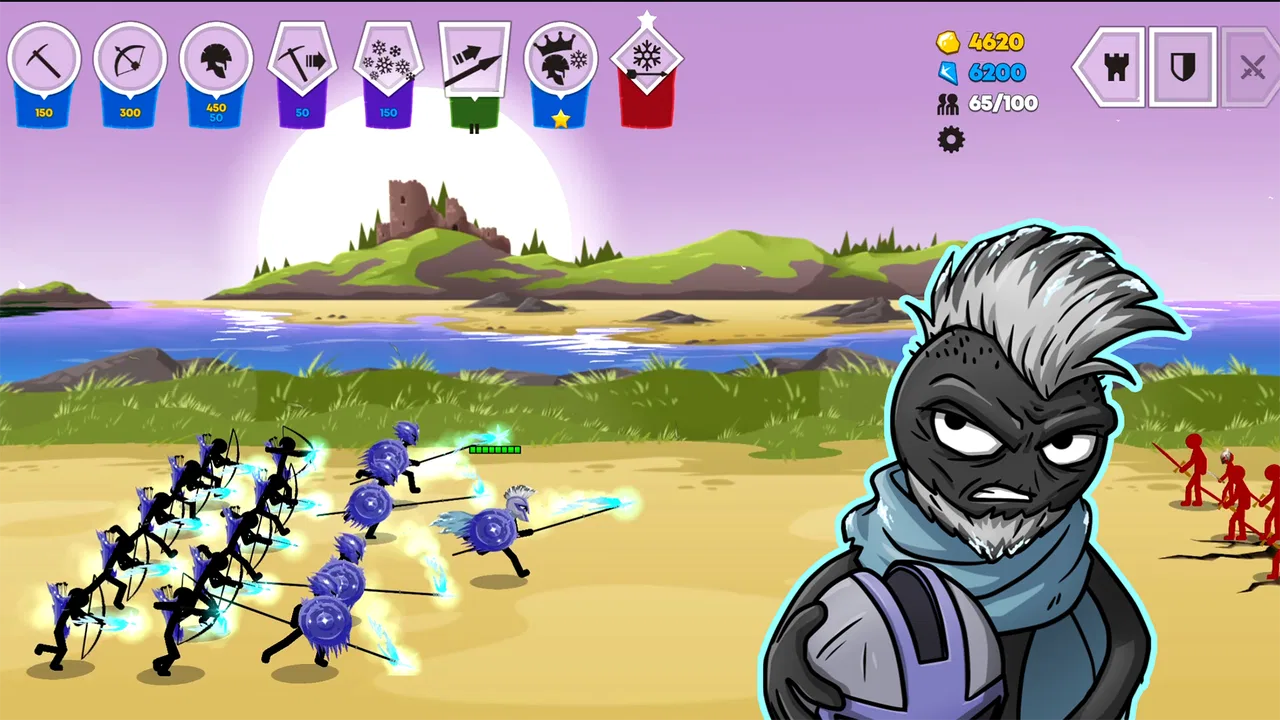
Stick War: Saga is a strategic and action-packed game where players command an army of stick figures to conquer territories and defeat enemies. The game involves resource management, unit creation, and tactical planning to overcome opponents and progress through various levels. It's a blend of strategy and real-time action.
02What are the main features of Stick War: Saga?
Stick War: Saga offers a variety of features including a campaign mode with multiple levels, different stick figure units with unique abilities, and a multiplayer mode for competitive gameplay. The game also provides resource management mechanics and a customization option for player-controlled units, enhancing the strategic depth.
03Is Stick War: Saga free to play?
Stick War: Saga is free to download and play, but it includes in-app purchases. These purchases can enhance gameplay by offering additional resources or unlocking special units and abilities. However, players can still enjoy the full experience without spending money, albeit possibly at a slower progression rate.
04What platforms is Stick War: Saga available on?
Stick War: Saga is available on both Android and iOS platforms. Players can download the game from the Google Play Store or the Apple App Store. The game is optimized for both smartphones and tablets, ensuring a smooth gaming experience across different devices.
05Does Stick War: Saga require an internet connection?
Stick War: Saga can be played offline, allowing players to enjoy the campaign mode without an internet connection. However, for certain features like multiplayer modes and updates, an internet connection is necessary. This flexibility makes it convenient for players who may not always have access to Wi-Fi or mobile data.
Pros
- Engaging strategy gameplay.
- Wide variety of units and upgrades.
- Challenging AI opponents.
- Smooth and intuitive controls.
- Offline play available.
Cons
- Graphics could be more polished.
- In-app purchases can be pricey.
- Limited multiplayer options.
- Occasional performance lags.
- Repetitive sound effects.

Stick War: Saga
Gallery